Not Only Farsi: Sogdian, the Iranian Language That Connected the Silk Roads
An undelivered merchant’s letter opens a window onto an Iranian world stretching from Samarkand to China—and a language whose legacy survives today.
A language you might partly recognise
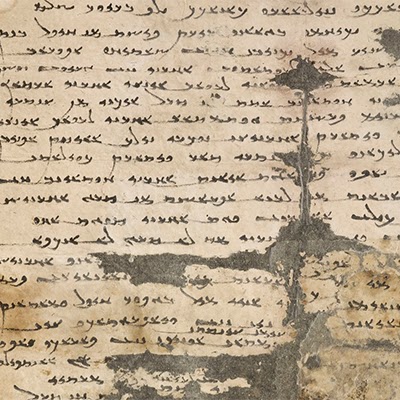
Look at these words:
(ēw-)zār βrēwar āfrīwan namācyu
They come from the opening greeting of a letter written about 1,700 years ago. If you speak Persian, parts may sound unexpectedly familiar.
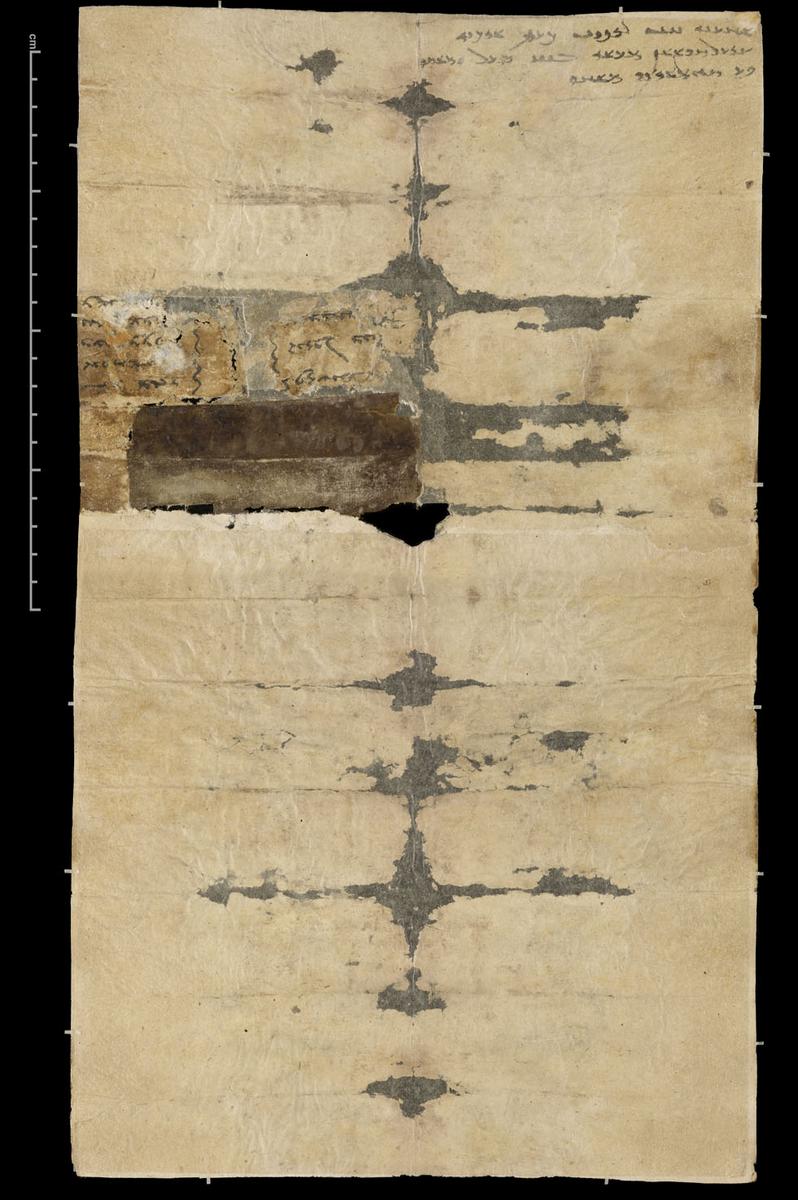
The language is Sogdian. The writer was a merchant named Nanai-vandak, sending news from China to Samarkand. His letter, usually dated to around 313–314 CE, apparently never reached its destination. Centuries later, it was found near Dunhuang.
The greeting offers blessings and respectful homage, counted in thousands and tens of thousands. Behind its unfamiliar spelling are connections to Persian words such as hazār, āfarin, and namāz.
This small piece of correspondence reveals something easily overlooked: the history of Iranian languages extends far beyond Persian—and beyond the borders of modern Iran. [1]
Iranian does not mean only Persian
In linguistics, Iranian names a group of related languages within the Indo-European family. It does not describe the citizenship of their speakers.
Persian belongs to this family, alongside Kurdish, Balochi, Pashto, Ossetic, and many other languages. Their speakers live across several countries. Persian itself has major varieties in Iran, Afghanistan, and Tajikistan.
Sogdian belonged to the Eastern Iranian group; Persian belongs to the Western group. They are relatives with a shared ancestry. Sogdian was neither an old form of Persian nor simply Persian spoken with a different accent. [2]
Its homeland was Sogdiana, centred on places such as Samarkand, Bukhara, and Panjakent, in what is now Uzbekistan and Tajikistan. Its reach, however, extended much farther. [3]
That distinction changes how we read the region’s history. An Iranian language could be spoken in Central Asia, written in China, and used in the administration of a Turkic state.
Familiar words inside an unfamiliar sentence
The letter’s greeting becomes less mysterious when we compare a few words.
| Sogdian form | Meaning in the greeting | Related Persian word |
|---|---|---|
| xutāw | Lord or master | خدا — khodā, now “God” |
| (ēw-)zār | One thousand | هزار — hazār |
| βrēwar | Ten thousand | بیور — bēvar, an archaic word |
| āfrīwan | Blessing | آفرین — āfarin |
| namācyu | Homage or reverence | نماز — namāz, now associated with prayer |
These connections do not make Sogdian immediately understandable to a Persian speaker. Pronunciation, grammar, and meaning changed along different paths.
They also do not mean that every similar Persian word was borrowed from Sogdian. Related languages inherit vocabulary from common ancestors, and they can also borrow from one another.
The pleasure lies in recognising something familiar inside something unfamiliar: a word separated from its relative by centuries, yet still carrying a trace of the connection.
The letter that never arrived
Nanai-vandak’s message moves from formal courtesy to alarming news.
He reports upheaval in China, including the destruction of Luoyang, famine, and the fate of merchant communities caught in the crisis. Then he turns to money held at home, arrangements for its management, and the future of a dependent orphan.
The change of subject is striking. Political catastrophe sits beside practical obligations. Even amid uncertainty, someone still needs to protect a deposit, account for goods, and care for a child. [1]
In 1907, Aurel Stein discovered five nearly complete Sogdian letters, along with fragments, at a ruined watchtower west of Dunhuang. How they ended up there remains uncertain; confiscation by a garrison is one proposed explanation.
Their survival is extraordinary. Messages intended for particular recipients became evidence for an entire trading world. [4]
The collection also preserves the voice of Miwnay, a woman stranded in Dunhuang who wrote about abandonment and hardship. These are more than commercial records. They contain anxiety, anger, responsibility, and the frustration of waiting for a reply.
The people behind the Silk Roads become much easier to imagine when we read their letters.
A network built through trade
The Silk Roads were a changing web of routes, settlements, and relationships. Sogdian merchants became some of its most important participants, particularly from the fifth to the eighth centuries.
Their influence depended on communities established far from home, commercial partnerships, and connections with powerful neighbours. Their activities linked Central Asian cities with China and the steppe.
Sogdian also served as an administrative language for early Turkic rulers. The Bugut inscription in Mongolia is a notable example of its use beyond Sogdiana itself. [5]
Trade carried more than goods. It created opportunities for people, stories, beliefs, and writing practices to travel.
Surviving Sogdian manuscripts include Buddhist, Manichaean, and Christian texts. The same language could serve communities with different religious commitments—a reminder of the cultural variety of the societies connected by these routes. [3]
Rustam before Ferdowsi
For readers familiar with the Shahnameh, one connection is especially compelling.
A Sogdian manuscript from Dunhuang tells a story of Rustam and his horse Rakhsh fighting demons. Its surviving fragments are now divided between London and Paris. The manuscript was copied around the ninth century, roughly two hundred years before Ferdowsi completed his epic.
The episode does not correspond exactly to a story in Ferdowsi’s version. It offers evidence of a wider storytelling tradition in which Rustam’s adventures circulated across languages.
Earlier wall paintings at Panjakent also depict episodes associated with Rustam and Rakhsh. [6]
The significance is more interesting than a contest over who can claim a hero. Stories crossed linguistic boundaries, and each surviving version preserves a different part of their history.
How Sogdian lost ground
Sogdian did not disappear at a single moment.
The Arab conquest changed the political setting, while subsequent shifts in trade, religion, and urban life altered the conditions in which the language was used.
By the tenth century, Persian was established in Samarkand and Bukhara, although Sogdian apparently continued in surrounding areas. Its replacement was gradual and uneven. [3]
Meanwhile, the Samanid court at Bukhara became a major centre of New Persian literature. Poetry flourished there, older Iranian epic traditions were collected, and works were translated into Persian.
This did not make Sogdian an ancestor of Persian. It shows how the history of Persian literature became closely connected with regions that had previously supported other Iranian languages. [7]
Languages can lose ground without their speakers, stories, and cultural influence simply vanishing.
What survives
The clearest living connection is Yaghnobi, spoken by communities originating in Tajikistan’s Yaghnob Valley.
Yaghnobi descends from a Sogdian dialect. It is not an unchanged version of the language in Nanai-vandak’s letter, but a living language with its own history. Calling it merely a relic misses the people who continue to use it. [8]
Sogdian’s writing system also had a long afterlife. Its cursive script contributed to the development of the Old Uyghur script, which in turn became the basis for traditional Mongolian writing and, later, Manchu. [3]
A language can therefore leave several kinds of inheritance: a descendant language, related vocabulary, stories preserved elsewhere, and writing systems adopted by other peoples.
Reading a wider history
Sogdian invites us to look beyond a history organised only around modern countries or their dominant languages.
For a Persian speaker, its familiar words provide an entry point. For someone in Uzbekistan or Tajikistan, its homeland offers another. For anyone interested in the Silk Roads, the letters reveal how distant communities stayed connected—and what happened when those connections failed.
Nanai-vandak wrote about a crisis, business obligations, and people whose futures worried him. He could not have known that his undelivered message would eventually reach readers across the world.
The letter failed to reach its intended audience. Seventeen centuries later, it still helps us hear the world its author inhabited.
References and further reading
- Nicholas Sims-Williams, The Sogdian Ancient Letters, with an introduction by Daniel C. Waugh.
- “Iranian Languages and Scripts” and “Eastern Iranian Languages”, Encyclopaedia Iranica.
- Yutaka Yoshida, “Sogdian Language i. Description”, Encyclopaedia Iranica.
- Nicholas Sims-Williams, “Ancient Letters”, Encyclopaedia Iranica.
- Étienne de la Vaissière, “Sogdian Trade”, Encyclopaedia Iranica.
- Ursula Sims-Williams, “Two Precious Items Copied by a Sogdian Scribe”, International Dunhuang Programme.
- “Persian Language i. Early New Persian”, Encyclopaedia Iranica.
- “Yaghnobi”, Encyclopaedia Iranica.